UCloud Global cloud servers are now among the first to officially support and launch the revolutionary open-source AI agent platform — Clawdbot. The image is currently available across multiple regions including the United States, Singapore, and Japan, enabling users to quickly build their own “24/7 Personal AI Super Assistant.”
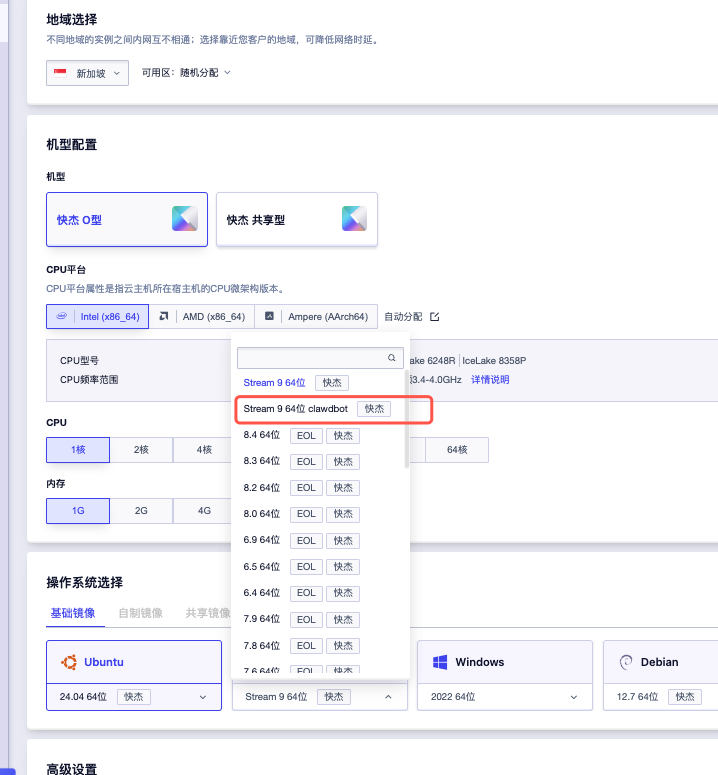
Cloud Server Deployment Portal:
https://console.ucloud-global.com/uhost/uhost/create
Clawdbot was initiated and open-sourced by veteran developer Peter Steinberger. Within just a few days of release, the project rapidly gained massive popularity across global developer communities and is already being regarded as a milestone in the evolution of “personal AI super assistants.”
Through localized deployment and an advanced AI agent architecture, Clawdbot transforms AI from a simple conversational tool into an intelligent system capable of persistent memory, proactive task execution, and deep integration into users’ daily workflows and personal life.
Within only a few days of going open-source, Clawdbot gained more than 20,000 stars on GitHub:

From “Chat Tool” to “Executable AI Agent”: How Clawdbot Is Redefining Personal AI
Unlike traditional AI assistants, Clawdbot is not limited to conversational interactions. Instead, it is built around an Agent-centric architecture with several groundbreaking technical capabilities:
-
Long-Term Memory Capabilities: All interactions, preferences, and contextual information are continuously stored locally through files and Markdown logs, allowing the AI to genuinely “remember” requests and decisions from weeks earlier. -
Proactive Triggering and Automated Execution: Clawdbot can actively perform actions based on time schedules, events, or environmental changes instead of passively waiting for instructions, enabling true 24/7 autonomous operation. -
High-Privilege Execution Capabilities: With user authorization, Clawdbot can access file systems, execute Shell commands, run scripts, call third-party APIs, and integrate with messaging platforms such as WhatsApp and Telegram to handle complex tasks including email management, data processing, and workflow orchestration. -
Decoupled Models and Tools: Clawdbot supports multiple large language models including Claude, GPT, and Gemini, while also allowing continuous expansion through MCP, plugins, and custom scripts.
As Clawdbot continues to explode in popularity, many users have attempted to deploy it across multiple local devices to maintain long-term operation. However, in real-world usage, stability, uptime reliability, and operational costs quickly become major challenges.
UCloud’s decision to bring Clawdbot into a cloud server environment directly addresses the key obstacles preventing large-scale adoption of personal AI agents:
-
24/7 Stable Online Availability: Cloud servers are naturally suited for continuously running AI agents, avoiding interruptions caused by power outages, device sleep states, or unstable local networks. -
Lower Deployment and Usage Barriers: Users no longer need to purchase additional hardware. A single cloud server is enough to deploy a fully operational AI assistant within minutes. -
Full User Control Over Data: Clawdbot’s memory, configuration, and automation logic all run entirely within the user’s dedicated cloud environment, preventing sensitive data from being scattered across multiple SaaS platforms. -
Flexible Scaling with Controllable Costs: Users can freely select cloud server specifications based on workload complexity, making the platform suitable for both individual users and small teams or studio-level deployments.
clawdbot --versionclawdbot onboard –install-daemon

As a neutral cloud service provider, UCloud remains committed to lowering the barrier to adopting cutting-edge AI technologies, enabling every developer and business to safely and conveniently harness next-generation AI productivity tools.
AI is currently undergoing a major transformation — evolving from “conversational interaction” into “autonomous execution.” UCloud will continue strengthening its support for AI Agents and positioning itself as the infrastructure layer connecting intelligent agents, large language models, and real-world tasks.