11000人交流群欢迎你加入:https://telegram.me/gwvpsceping

On April 1, Amazon Web Services (AWS) officially launched Amazon Nova Act and its SDK research preview, an AI-focused offering designed to help developers build intelligent agents capable of performing tasks directly within web browsers. Based on official announcements, this article explores the core features, use cases, and future direction of Amazon Nova Act.
Apply for the AWS Free Tier: Get up to 12 Months of Free Cloud Servers – AWS Free Tier 1. Background of Amazon Nova Act With the rapid adoption of large language models (LLMs), agent technology has evolved from simple conversational interactions into intelligent assistants capable of actively executing tasks. While many AI agents are already available on the market, most still rely heavily on API calls and struggle with more complex workflow scenarios. AWS has long focused on delivering practical generative AI solutions, with products such as Alexa+, Amazon Q, and Rufus already in the market. With the launch of Amazon Nova Act, AWS further extends agent capabilities, enabling agents to perform operations on web pages like real users, while providing developers with more flexible automation tools. 2. Overview of the Amazon Nova Act SDK The Amazon Nova Act SDK helps developers break down complex tasks into executable commands such as searching, checkout, data extraction, and interface interactions, while supporting both automated API calls and browser-based operations to improve task reliability. Key Features: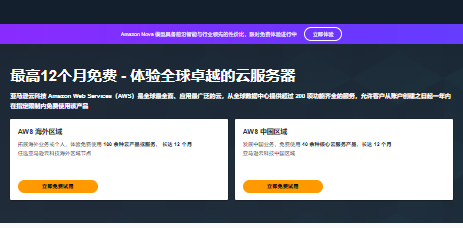
- Task Decomposition: Supports breaking down and executing complex tasks, such as avoiding unnecessary insurance upsells during transactions.
- Web Automation: Supports browser operations powered by Playwright, including filling forms, clicking buttons, and more.
- Debugging and Optimization: Enables Python-based testing, breakpoint debugging, and parallel processing for stable task execution.
- High Reliability: Designed for unsupervised scenarios and can be directly integrated into products for asynchronous task handling.
- Intelligent Data Extraction: In official demos, developers used Pydantic classes to parse web data and calculate biking times from apartments to nearby train stations, enabling intelligent rental assistant applications.
- E-Commerce Workflow Automation: Using cron jobs, the system can periodically search for specific products, add them to the cart, and complete purchases automatically, enabling “hands-free” e-commerce automation.
- Smart Customer Support and Task Management: Combined with Bedrock APIs and Claude 3.7 Sonnet models, developers can build AI assistants with task execution capabilities, such as automatically handling user requests or checking order statuses.
- How is Amazon Nova Act different from traditional AI agents?
- Traditional agents mainly rely on API calls, while Amazon Nova Act can directly perform tasks inside web browsers, providing stronger automation capabilities.
- What use cases is Amazon Nova Act suitable for?
- It can be applied to smart customer service, office automation, e-commerce automation, and data collection, especially for high-reliability task execution scenarios.
- How can developers get started with the Amazon Nova Act SDK?
- Visit nova.amazon.com to download the SDK or register for an AWS account to start testing the platform for free.
- Will Amazon Nova Act support more capabilities in the future?
- AWS plans to combine reinforcement learning and large-scale model training to potentially expand into multimodal agents, voice control, and more advanced applications.