For users who need a Japan-based VPS, price is only one part of the decision. Network stability, latency from mainland China, and bandwidth performance are often the real deciding factors. This is especially true for use cases such as website hosting, cross-border business, remote work, gaming acceleration, and streaming applications, where line quality matters significantly.
This review focuses on the SukoCloud Tokyo Japan VPS. Overall, the product is positioned as a “low price + three-network optimized direct routing + high bandwidth” solution. The entry-level plan starts at just 33.6 RMB/month and supports Alipay and WeChat Pay, making it very accessible for users in China.
Below is a detailed evaluation covering routing, latency, stability, download speed, pricing, and purchasing experience.
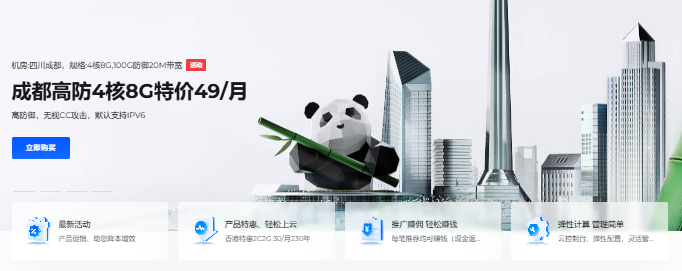
SukoCloud Official Website: SukoCloud_Global Cloud Services Provider_Professional Cloud Computing Solutions
Overview of SukoCloud Japan VPS Features
| Parameter | Description |
|---|---|
| Datacenter Location | Tokyo, Japan |
| Bandwidth Range | 50Mbps ~ 500Mbps |
| Network Routing | Direct China Telecom, China Unicom, China Mobile routing |
| Operating System | Linux, Windows |
| Payment Methods | Alipay, WeChat Pay |
| Starting Price | 33.6 RMB/month |
| Recommendation Rating | ★★★★★ |
Advantages
- Tokyo datacenter with low latency to China
- Direct routing across all three major Chinese networks
- Stable network performance
- High bandwidth and good download speeds
- Affordable pricing with additional annual discounts
- Supports Alipay and WeChat Pay
- Flexible configuration options
Disadvantages
- The lowest-tier plan does not support Windows installation
Network Performance Testing
To evaluate the real-world performance of SukoCloud Tokyo VPS, we tested the following:
- Local ping latency
- Average latency across China Telecom, Unicom, and Mobile
- Stability of domestic and international nodes
- Routing paths for all three networks
- Upload and download speeds
- Local file download performance
Local Ping Latency
The average local ping latency is around 85ms.
For a Tokyo datacenter, this is a very good result. During continuous testing (28 pings), no packet loss was observed, indicating strong stability.
In practical use, SSH connections and web browsing remain smooth and responsive.
Average Latency Across China Networks
- China Telecom: ~70ms
- China Unicom: ~74ms
- China Mobile: ~82ms
- Overall average: ~74ms
Overall performance is well-balanced, with China Telecom being slightly better.
A stable latency of 70–80ms to Japan is considered excellent for most applications.
Network Stability Testing
Continuous ping tests across multiple domestic and international nodes showed no significant packet loss within China.
- High stability for domestic nodes
- Normal connectivity for overseas nodes
- Low network fluctuation
- No abnormal behavior during long-term testing
This level of stability is sufficient for website hosting, remote work, and cross-border operations.
Routing Analysis (Three Networks)
China Telecom Routing
Traffic exits via Shanghai and connects directly to Tokyo using China Telecom backbone routes.
- Fewer hops
- Minimal intermediate nodes
- Stable latency control
China Unicom Routing
Traffic exits from Beijing and connects to Tokyo via AS4837 optimized routes.
This is a commonly used optimized Unicom route in Asia with stable performance.
China Mobile Routing
Traffic exits via Shanghai, passes through Hong Kong, and connects to Tokyo via the CMI backbone network.
CMI generally performs well in Asia, offering stable though slightly higher latency than Telecom.
Upload and Download Speed
- Upload speed: ~137Mbps
- Download speed: ~176Mbps
This is an excellent result for a Japan VPS in this price range.
Even during peak hours, maintaining good bandwidth utilization indicates sufficient network resources.
Local Download Performance
Local file download speed reached 15.4MB/s.
This is a strong performance level for Japan VPS products.
- Website file transfers
- Video downloads
- Data synchronization
- Cloud backups
All benefit from this level of speed.
SukoCloud Japan VPS Pricing Plans
| Plan | CPU | RAM | Storage | Bandwidth | Traffic | Price |
|---|---|---|---|---|---|---|
| Plan 1 | 1 Core | 1GB | 20GB | 50Mbps | 500GB | 33.6 RMB/month |
| Plan 2 | 2 Cores | 2GB | 40GB | 100Mbps | 1TB | 141.6 RMB/month |
| Plan 3 | 4 Cores | 4GB | 60GB | 200Mbps | 2TB | 249.6 RMB/month |
| Plan 4 | 8 Cores | 8GB | 80GB | 300Mbps | 5TB | 441.6 RMB/month |
Overall, the pricing is quite competitive for a Japan VPS.
- Annual billing often includes additional discounts
- CPU, RAM, and bandwidth are customizable
- Some configurations support Windows
- Sufficient bandwidth resources
It is especially attractive for users with limited budgets who still need stable Japan connectivity.
Who Should Use SukoCloud Japan VPS?
Website Hosting
- Corporate websites
- WordPress blogs
- Foreign trade websites
- Lightweight applications
Cross-border E-commerce & Business
- Online stores
- ERP systems
- Data synchronization
- Business management tools
Remote Work
- Remote desktop
- File synchronization
- Remote development
- Office system deployment
Gaming & Streaming
- Asian game servers
- Video streaming
- Media applications
How to Purchase SukoCloud Japan VPS
Step 1: Visit the Product Page
Go to the official website and select:
- Cloud ECS products
- Tokyo Japan region
Step 2: Choose Configuration
- CPU
- RAM
- Disk
- Bandwidth
- Operating system
Add the selected configuration to cart.
Step 3: Complete Payment
Complete payment via:
- Alipay
- WeChat Pay
The process is simple for users in China.
FAQ
1. Is SukoCloud Japan VPS suitable for hosting websites?
Yes. Low latency and stable routing make it suitable for Asian traffic websites.
2. Does it support Windows?
Yes, but the lowest-tier plan does not support Windows. Higher configurations are recommended.
3. Is the network stable?
Yes. Testing shows no significant packet loss across major networks.
4. How is China Mobile performance?
It uses the CMI backbone network. Slightly higher latency than Telecom, but still stable.
5. What payment methods are supported?
Alipay and WeChat Pay are supported.
Conclusion
Overall, the SukoCloud Tokyo VPS offers balanced performance and strong value for money.
- Direct routing across all three Chinese networks
- Low latency Tokyo datacenter
- Fast download speeds
- High bandwidth allocation
- Affordable pricing
- Convenient payment methods
With a starting price of just 33.6 RMB/month, the entry barrier is very low.
If you need:
- A Japan VPS with good access speed from China
- A Tokyo server suitable for hosting and cross-border business
- A cost-effective Japan node solution
Then SukoCloud Tokyo VPS is worth considering.