The normal operation of websites and servers relies on IP addresses. Over the past few decades, IPv4 has served as the core protocol for Internet addressing. However, with the rapid growth of smartphones, IoT devices, and cloud computing, IPv4 addresses have gradually become exhausted. To solve this issue, IPv6 was introduced.
So what exactly are the differences between IPv4 and IPv6? Is it necessary to upgrade to IPv6? This article provides a complete explanation, from technical principles to real-world applications.
1. What Is IPv4?
IPv4 is the traditional foundation protocol of today’s Internet. It uses a 32-bit address structure and can theoretically provide around 4.29 billion IP addresses.
Example of an IPv4 address:
192.168.1.1
Main characteristics:
- Composed of 4 groups of decimal numbers
- Each group ranges from 0–255
- Separated by dots
- Limited total address space
The Core Problem Facing IPv4
With the explosive growth of mobile Internet and IoT devices, IPv4 address resources have become severely depleted. Regional Internet Registries such as RIPE NCC and APNIC have already announced the exhaustion of IPv4 allocations.
To mitigate address shortages, IPv4 heavily relies on NAT (Network Address Translation), allowing multiple internal devices to share a single public IP address. However, this is only a temporary workaround rather than a long-term solution.
2. What Is IPv6?
IPv6 is the next-generation Internet Protocol. It uses a 128-bit address structure and can theoretically provide approximately 340 undecillion IP addresses (3.4×10³⁸).
Example of an IPv6 address:
2001:0db8:85a3:0000:8a2e:0370:7334
Main characteristics:
- Consists of 8 groups of hexadecimal numbers
- Separated by colons
- Virtually unlimited address space
- Supports automatic configuration
According to Google’s IPv6 statistics, global IPv6 adoption has approached 50%, while some European countries have already exceeded 70% adoption.
3. Key Differences Between IPv4 and IPv6
| Comparison Item | IPv4 | IPv6 |
|---|---|---|
| Address Length | 32-bit | 128-bit |
| Address Capacity | ~4.29 Billion | ~3.4×10³⁸ |
| Address Format | Decimal | Hexadecimal |
| Requires NAT | Yes | No |
| Auto Configuration | Depends on DHCP | Supports SLAAC |
| Header Structure | More Complex | Simplified |
| Security Mechanism | IPsec Optional | Originally Mandatory IPsec Support |
4. Differences in Header Structure and Processing Efficiency
IPv6 was designed with an optimized packet header structure:
- Removes unnecessary fields
- Uses extension headers
- Improves routing and forwarding efficiency
In its original specification, IPv6 also required mandatory support for IPsec, which helps with:
- Data authentication
- Replay attack prevention
- Encrypted data transmission
Although IPsec support in IPv6 is now considered optional, the overall security architecture remains more modern than IPv4.
5. Differences in NAT Mechanisms
Why Does IPv4 Depend on NAT?
Because IPv4 addresses are limited, NAT is used to allow multiple devices to share one public IP address.
Drawbacks include:
- Breaks end-to-end communication
- Increases network complexity
- Makes certain applications harder to traverse
Why Doesn’t IPv6 Need NAT?
IPv6 offers an enormous address space:
- Each device can receive a public IP address
- Restores true end-to-end communication
- Simplifies network architecture
- Better suited for cloud computing and SDN deployments
International Internet organizations have also pointed out that NAT is not a security mechanism, and removing NAT in IPv6 does not reduce network security.
6. IPv6 Auto Configuration Capability (SLAAC)
IPv6 introduces SLAAC (Stateless Address Auto Configuration):
- No manual configuration required
- No dependency on DHCP servers
- Automatically generates globally unique addresses
- Reduces administrative overhead
In IPv4 environments, address allocation typically depends on centralized DHCP management. IPv6 devices, however, can autonomously generate addresses, greatly simplifying operations and maintenance.
7. Recommended Overseas VPS Providers with IPv6 Support
For website hosting, cross-border services, API deployments, and CDN acceleration, choosing a VPS that supports IPv6 has become increasingly important.
Below are several popular overseas VPS providers that support IPv6:
1. HostDare
HostDare offers both standard and CN2-optimized US VPS services with IPv4 + IPv6 dual-stack support.
HostDare Official Website:
Web Hosting Service – Shared, VPS and Dedicated Hosting | HostDare SSD Web Hosting

Basic Plan Example
| Item | Configuration |
|---|---|
| CPU | 1–4 Cores |
| Memory | Starting from 1GB |
| Storage | SSD/NVMe |
| IPv4 | 1 Included |
| IPv6 | Supported |
| Network | Standard / China Optimized |
Highlights:
- IPv6 visible in the control panel
- IPv6 support available since 2020
- Suitable for beginners and China-optimized use cases
2. DMIT
DMIT focuses on high-end US VPS, Hong Kong VPS, and Japan VPS services, all with IPv6 support.
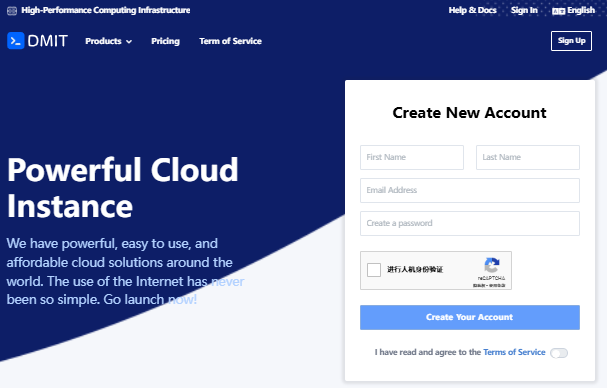
DMIT Official Website:
DMIT – High Performance VM in DMIT.IO Cloud Infrastructure Services
Network Configuration
| Item | Configuration |
|---|---|
| IPv4 | 1 Included |
| IPv6 | /64 Subnet |
| Network | Dual-Stack |
| Routing | China-Optimized Optional |
| Virtualization | KVM |
Advantages:
- Dual-stack network enabled by default
- Suitable for users with high network quality requirements
- Better accessibility to IPv6 resources
3. Just Hosting
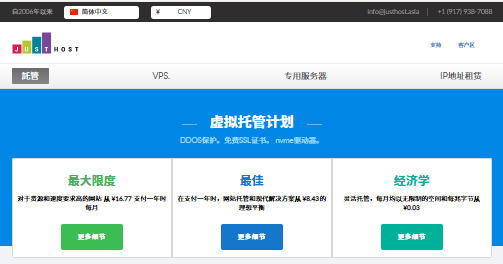
Official Website:
JustHost.ru Official Website
Just Hosting is a Russian VPS provider operating more than 40 data center locations. Users can frequently switch both locations and IP addresses. All VPS plans support IPv4 + IPv6 configurations.
Plan Features
| Item | Configuration |
|---|---|
| Virtualization | KVM |
| Storage | NVMe |
| Traffic | Unmetered |
| IPv4 | Supported |
| IPv6 | Supported |
| Locations | 40+ Nodes |
Suitable for:
- Users needing frequent IP or location changes
- Multi-region deployments
- High traffic requirements
8. Is Migrating from IPv4 to IPv6 Necessary?
Small Businesses
- If existing IPv4 resources are sufficient
- No large-scale public deployment needed
- Upgrading can be postponed
Large Enterprises / Hosting Providers
- Facing scaling requirements
- Providing public Internet services
- Recommended to deploy dual-stack networks
The current mainstream approach is:
IPv4 + IPv6 Dual-Stack Coexistence
This ensures compatibility with traditional networks while preparing for future Internet development.
9. Frequently Asked Questions (FAQ)
Q1: Will IPv6 completely replace IPv4?
Not in the short term. The mainstream solution today is dual-stack deployment, though IPv6 adoption will continue to grow over time.
Q2: Is IPv6 more secure?
IPv6 natively supports IPsec and uses a more modern architecture, but actual security still depends on deployment strategy rather than the protocol itself.
Q3: Will enabling IPv6 affect SEO?
No. Major search engines already support IPv6 access, and it does not negatively affect indexing.
Q4: Is IPv6 support necessary when choosing a VPS?
If you:
- Need large numbers of public IPs
- Deploy APIs or cloud applications
- Need access to IPv6-only resources
Then choosing a VPS with IPv6 support is highly recommended.
Conclusion
The fundamental differences between IPv4 and IPv6 include:
- Address capacity
- Network architecture design philosophy
- Enhanced auto-configuration capabilities
- Whether NAT is required
- More modern security extension mechanisms
As global IPv6 adoption continues to increase, deploying dual-stack networks has become a long-term trend. For website hosting, cloud services, and cross-border business operations, choosing an overseas VPS that supports IPv6 will provide better scalability and future-proofing.