11000人交流群欢迎你加入:https://telegram.me/gwvpsceping

Amazon Web Services (AWS) has announced that its Amazon EC2 T4g instances are now available for a free trial. Both new and existing users can enjoy up to 750 hours per month of free usage on the t4g.small instance. This promotion will be available until December 31, 2025, allowing users to build and deploy applications on Amazon Graviton2-based instances at no additional cost. Amazon Cloud official website: Amazon Web Services – The world’s leading cloud computing service provider – operated by Sinnet and NWCD in China
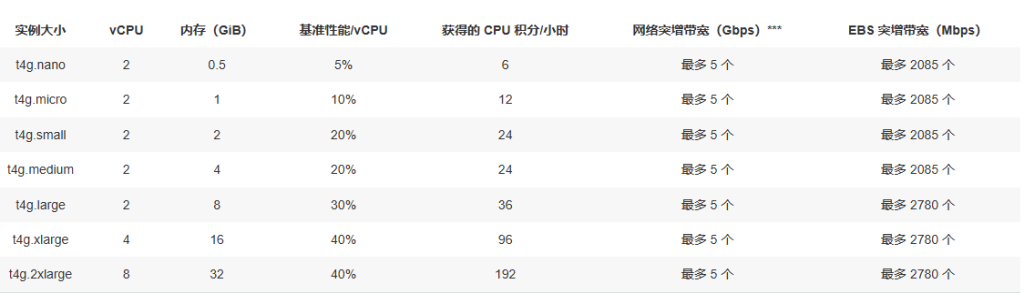
Amazon EC2 T4g Free Trial Details
1. Eligible Users
Any user with an Amazon Web Services account—whether new or existing—can participate in the T4g free trial. The promotion will run until December 31, 2025, and works alongside AWS China’s existing free tier (such as t2.micro/t3.micro). Even if you have already exhausted your t2.micro or t3.micro free usage, you can still access the T4g free trial quota.2. Available Regions
This free trial is currently available in two AWS China regions:- AWS China (Beijing Region) (operated by Sinnet)
- AWS China (Ningxia Region) (operated by NWCD) Note: The free usage hours are calculated separately for Beijing and Ningxia and are not shared between regions.
3. Pricing Information
The T4g free trial provides 750 hours per month of free usage for the t4g.small instance. Within this limit, users can run Amazon Linux 2, RHEL, and SUSE Linux AMIs (Amazon Machine Images) without additional charges. Once the 750-hour quota is exceeded, standard on-demand pricing will apply. Additionally, if users choose third-party AMIs from AWS Marketplace, extra software licensing fees may apply, which are not included in the free tier.Advantages of Amazon EC2 T4g Instances
Amazon EC2 T4g instances are powered by Amazon Graviton2 processors. Compared to the previous-generation T3 instances, they deliver up to 40% better price-performance. T4g instances support burstable performance, allowing CPU capacity to scale dynamically based on workload demand. These instances are widely used for:- Microservices
- Small to medium-sized databases
- Virtual desktop infrastructure (VDI)
- Business-critical applications